
Greek Yoghurt in the West: The Story of Authenticity Lost, and Found
The ‘Greek’ Yoghurt We All Know
"Greek Yoghurt." The term conjures images of creamy texture, a satisfyingly tangy flavour and a protein punch that has made it the undisputed champion of breakfast bowls and healthy snacks across the Western world. It is a modern global staple, lauded for its versatility and nutritional benefits.
But here is a fundamental truth: the Greek yoghurt dominating supermarket shelves in the UK and USA is, in almost every instance, a product born of industrial necessity, not Mediterranean tradition.
Its story is one of authenticity lost in translation - a tale of migration, economics and a post-war food system prioritising volume over vitality. At Philotrophie, our mission is to reintroduce genuine, nutrient-dense yoghurt made through heritage practices that shaped this ancient food, right here in the Cotswolds.
Back to the Aegean: The Authentic Milk Source
To understand the difference, we must first look to Greece.
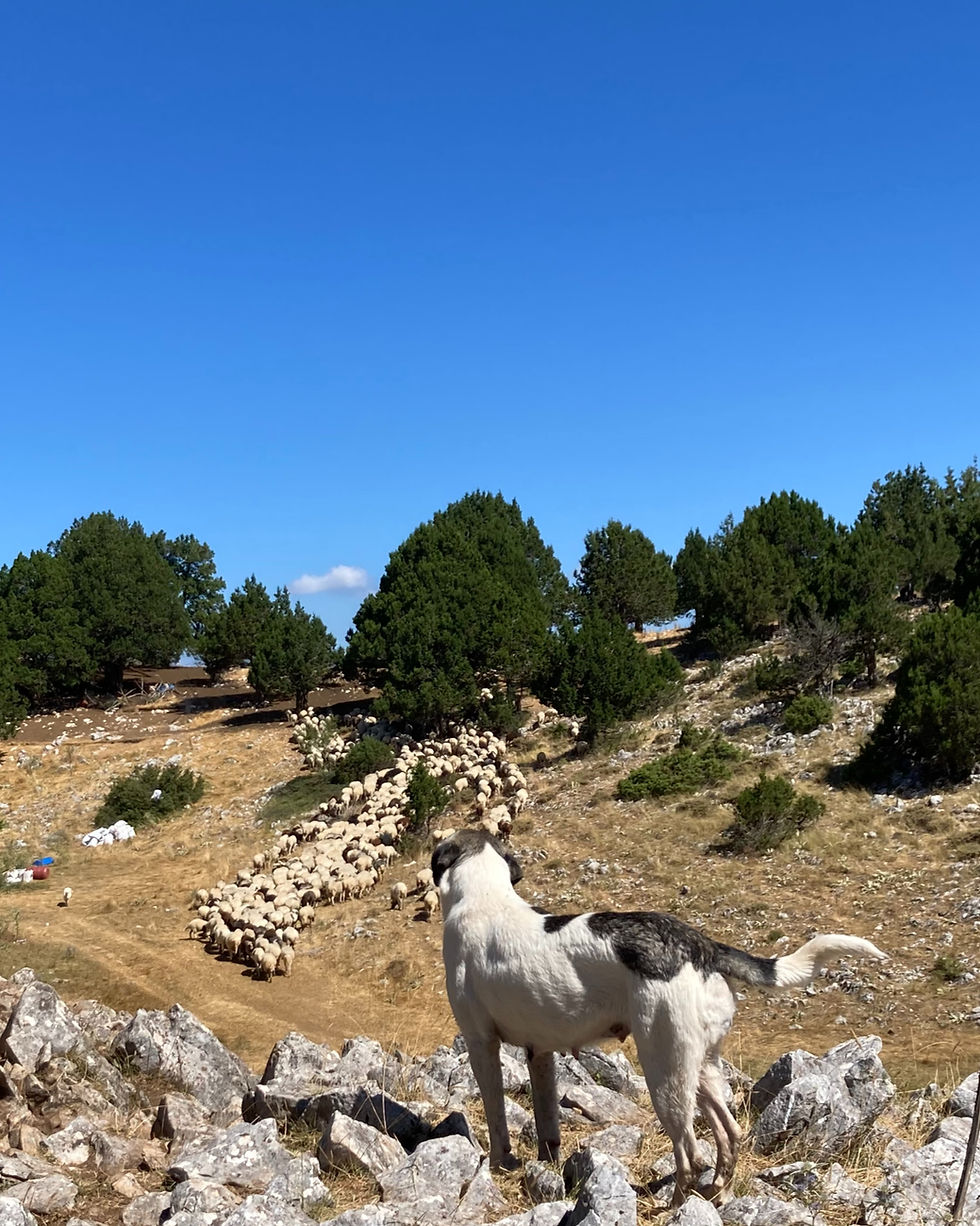
The yoghurt consumed daily by generations of Greek families was, and traditionally remains, a product of the shepherd's flock. In Greece, traditional yoghurt is made almost exclusively from sheep’s milk.
This wasn't an arbitrary choice; it was one dictated by geography and wisdom. Sheep and goats thrived in the Mediterranean climate, roaming the valleys and mountains, providing a sustainable source of both milk, wool and meat. Sheep’s milk is naturally richer than cow’s milk, containing higher concentrations of fat, protein and micro-nutrients. This composition is key: it produces a naturally thicker, more wholesome yoghurt that requires minimal intervention.
This nutrient-dense milk was the foundation of the authentic Greek yoghurt tradition.
The Post-War Shift: Quantity Over Quality
The tradition began to change as Greeks moved away from their homeland. When Greek immigrants arrived in countries like the USA, they brought with them their family recipes and traditions, and some bravely turned them into businesses.
However, they faced a new reality: economics. In Western countries like the UK and USA, cow’s milk was (and still is) the predominant and most accessible form of milk. This is purely a matter of yield; a cow produces a significantly greater volume of milk than a sheep. Generally, sheep in these Western countries were reared primarily for wool and meat, not dairy. Greek pioneers adapted, using what was available and economical - the cow.
This shift was amplified by the post-war industrial food boom. As Michael Pollan explored vividly in his work, especially in Cooked, the demand for cheap food in large volumes utterly transformed the food landscape. Industrialisation meant that:
Yield became king: Using cow’s milk was cheaper and gave maximum volume, fitting the industrial demand.
Traditional methods vanished: Traditional, small-batch heritage practices were abandoned in favour of large-scale industrial machinery.
The loss of integrity: Legislation often required milk to be pasteurised and homogenised. While pasteurisation is vital for safety, homogenisation and other industrial practices alter the natural structure of the milk, stripping away much of the goodness found historically.
Today, many of the 'Greek yoghurts' found on UK shelves are made from cow's milk - even those exported from Greece - adapted for the convenience and cost demands of the global market. Furthermore, they are often stirred or the nutritious whey is strained out - a process that can remove some of the most beneficial elements - to achieve product consistency and to ensure that the yoghurt will not separate over time.
A New Direction: The UK Consumer Revolution
Interestingly, it appears that the landscape is starting to change again. Consumers in the UK are demanding greater transparency on food labelling and are increasingly fatigued by the conversation and confusion around Ultra-Processed Food (UPF). There is a powerful desire to reconnect with wholefood, quality products where the provenance and production methods are clear.
Enter, Philotrophie. This is why we have made a deliberate choice not to call our product "Greek Yoghurt."
The term already carries a strong preconception in the UK - one associated with the cow's milk, large-scale industrial product described above. To call ours the same would mask the authenticity we are striving to preserve.
The Philotrophie Promise: Heritage Revived in the Cotswolds
Our journey is the story of Greek family tradition finding its new home and truest expression in England. We are excited to bring genuine, authentic sheep’s yoghurt - Shepherd's Yoghurt - to a market that is ready to embrace quality and care.
We combine the knowledge of our Greek family's heritage practices with the quality of nutrient-dense sheep’s milk, sourced in the UK and made with care on a small scale here in the Cotswolds.
Our commitment to tradition means our methods stand in contrast to the industrial standard:
The milk: We use nutrient-rich sheep’s milk, honouring the original Greek source.
The process: Our milk is pasteurised for modern safety standards, but it is not homogenised. This preserves the milk's natural structure, keeping it as close to its farm-fresh state as possible, allowing us to deliver a product rich in its original goodness. We also do not stir our yoghurt, or strain it.
The name: We call it Shepherd's Yoghurt, a name that connects our customers directly to the ancient, natural, and careful practices of the shepherd's craft.
The story of "Greek Yoghurt in the West" is a lesson in how economics can reshape an ancient food. Our brand mission is to return to heritage practices, showcasing craft and (re)introducing the customer to this nutrient-dense, delicious yoghurt.
We invite you to taste the difference that authenticity, rich sheep milk, and sticking to heritage Greek practices can make. Experience the texture and flavour of a traditional food, made with care, transparency, and a respect for both our family's past and the consumer's future.
References:
IGD consumer research, 2023, Ultra processed foods: A consumer perspective.
Cooked series, 2017, Michael Pollan.
'Reimagining food: Readdressing and Respecting Values', Sustainability, 2022 14(12), Lingham et al.
Ultra- Processed People, Penguin Books, 2024, Chris Van Tulleken.


Comments